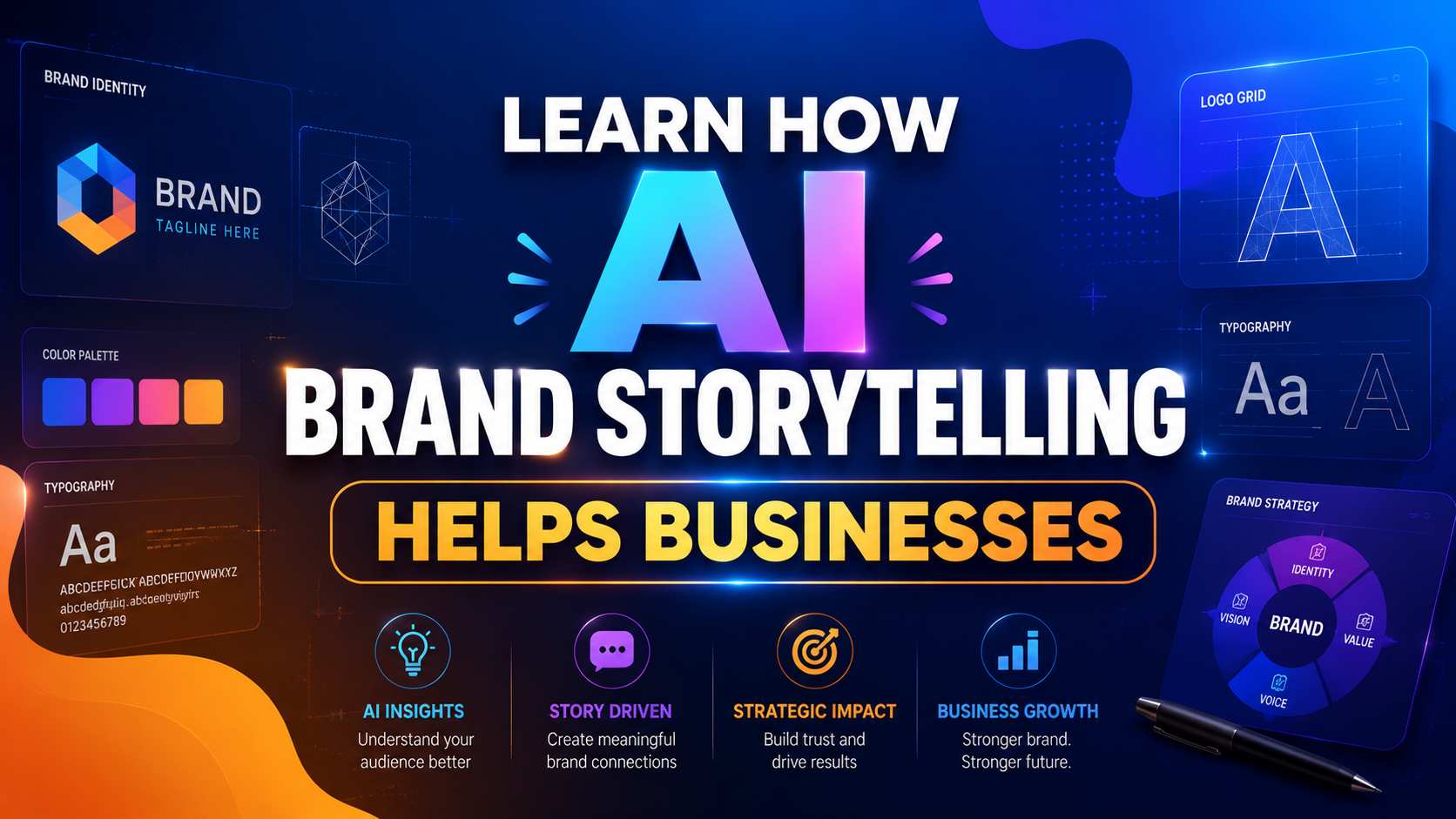
AI-Powered Brand Storytelling: How Brands Use Generative AI Without Losing Authenticity
Introduction: Can AI Tell Stories That Feel Human?
Storytelling has always been one of the most powerful tools in marketing.
Long before digital advertising, brands built trust through stories that inspired, educated, and emotionally connected with customers.
Today, the rise of Generative AI has transformed how businesses create content.
Marketing teams now use AI to generate:
- blog articles
- social media posts
- email campaigns
- video scripts
- product descriptions
- advertising copy
- customer support messages
While AI dramatically improves speed and productivity, it also raises an important question:
Can brands use AI without losing authenticity?
The answer is yes—but only when AI is used strategically.
The future of AI brand storytelling is not about replacing human creativity. It is about combining artificial intelligence with human insight to create faster, smarter, and more meaningful customer experiences.
This guide explores how businesses can use generative AI marketing while preserving a consistent brand voice, emotional connection, and customer trust.
What Is AI-Powered Brand Storytelling?
AI-powered brand storytelling is the process of using artificial intelligence to assist in creating, personalizing, and distributing brand stories across multiple marketing channels.
Rather than replacing human creativity, AI supports marketers by analyzing data, generating ideas, drafting content, and tailoring messages for different audiences.
Simple Definition
AI brand storytelling combines artificial intelligence with human creativity to create compelling, consistent, and personalized brand narratives that resonate with customers.
Instead of manually writing every piece of content, marketers use AI to accelerate the creative process while maintaining editorial control.
Why AI Brand Storytelling Is Becoming a Marketing Priority
Consumer expectations are evolving rapidly.
Today’s audiences expect content that is:
- relevant
- personalized
- timely
- conversational
- emotionally engaging
Creating this volume of content manually is challenging.
Generative AI helps businesses produce content efficiently while adapting messages to different platforms and customer segments.
As a result, AI-powered storytelling has become a strategic capability rather than just a productivity tool.
Why Storytelling Still Matters in the AI Era
Technology changes, but human psychology remains remarkably consistent.
People remember stories far better than facts alone.
Effective stories help audiences:
- understand a brand’s purpose
- build emotional connections
- develop trust
- remember key messages
- take action
AI can accelerate content production, but it cannot replace genuine human experiences, values, and emotions.
Successful brands use AI to enhance storytelling—not replace it.
Benefits of AI Brand Storytelling
1. Faster Content Creation
One of the biggest advantages of AI content marketing is speed.
AI can quickly generate:
- article outlines
- first drafts
- campaign ideas
- content variations
- social media captions
This allows marketing teams to focus more on strategy, editing, and creativity.
2. Personalized Storytelling at Scale
Modern customers expect personalized experiences.
AI analyzes customer data to adapt messaging based on:
- interests
- demographics
- purchase history
- browsing behavior
- engagement patterns
Instead of creating one generic campaign, marketers can deliver multiple personalized versions that speak directly to different audience segments.
3. Improved Content Consistency
Large organizations often struggle to maintain a consistent brand voice across multiple teams and channels.
AI can help enforce:
- tone of voice
- messaging guidelines
- terminology
- style consistency
This strengthens brand recognition over time.
4. Better Customer Engagement
AI can recommend the most effective content formats for different platforms, such as:
- blogs
- email newsletters
- social media posts
- video scripts
- chatbot conversations
The result is more relevant customer interactions.
5. Data-Driven Storytelling
Traditional storytelling often relies on creative intuition.
AI introduces behavioral insights by analyzing:
- customer feedback
- search intent
- engagement metrics
- purchase patterns
- sentiment analysis
This helps marketers create stories that address real customer needs.
The Limitations of Generative AI in Storytelling
Despite its advantages, AI has important limitations.
Understanding these limitations helps businesses avoid over-reliance on automation.
Limited Emotional Experience
AI does not experience emotions.
It predicts language based on patterns rather than personal experiences.
Human writers contribute:
- empathy
- cultural understanding
- lived experiences
- emotional nuance
These qualities remain essential for authentic storytelling.
Generic Content Risk
Without clear prompts and editorial review, AI-generated content can become:
- repetitive
- predictable
- overly generic
- lacking originality
Brands should always refine AI-generated drafts to ensure uniqueness.
Brand Voice Drift
Different AI prompts can produce inconsistent writing styles.
Without strong brand guidelines, businesses risk creating fragmented messaging.
A clear brand voice remains critical.
Accuracy and Context
Generative AI may occasionally produce:
- outdated information
- incorrect assumptions
- fabricated references
- misleading statements
Every AI-generated story should be reviewed by subject matter experts before publication.
Human Creativity vs AI-Generated Content
The debate is often framed as:
Human vs AI
A more effective approach is:
Human + AI
Each contributes unique strengths.
| Human Creativity | Artificial Intelligence |
|---|---|
| Emotional intelligence | Speed |
| Original ideas | Large-scale content generation |
| Storytelling intuition | Pattern recognition |
| Brand vision | Content personalization |
| Strategic thinking | Data analysis |
| Cultural awareness | Automation |
How to Maintain an Authentic Brand Voice with AI
Authenticity is one of the most valuable brand assets.
Customers quickly recognize content that feels overly automated.
Here are practical ways to maintain authenticity while using AI.
1. Define a Clear Brand Voice
Document your brand’s:
- personality
- tone
- vocabulary
- messaging style
- communication principles
AI performs better when given clear guidance.
2. Use AI for Drafting, Not Publishing
Treat AI as a creative assistant.
Use it to generate:
- ideas
- outlines
- first drafts
Then refine every piece with human editing.
3. Add Human Stories
Customers connect with:
- founder experiences
- customer success stories
- employee perspectives
- behind-the-scenes insights
These elements cannot be authentically generated by AI alone.
4. Prioritize Transparency
If AI significantly contributes to content creation, consider being transparent where appropriate.
Transparency strengthens trust.
5. Focus on Customer Value
Every story should answer one question:
How does this help the customer?
AI should enhance customer understanding—not simply produce more content.
Featured Snippet Opportunity
What is AI-powered brand storytelling?
AI-powered brand storytelling is the practice of using artificial intelligence to help create, personalize, and optimize brand narratives while maintaining a consistent brand voice, emotional connection, and customer trust through human oversight and strategic editing.
A Simple AI Storytelling Workflow
To balance efficiency with authenticity, follow this practical workflow:
- Define the campaign objective.
- Research audience needs and search intent.
- Use AI to generate ideas and first drafts.
- Add brand-specific insights, stories, and examples.
- Edit for tone, accuracy, and emotional impact.
- Optimize for SEO, AEO, and readability.
- Publish, measure performance, and refine future content based on analytics.
This workflow ensures AI enhances creativity instead of replacing it.