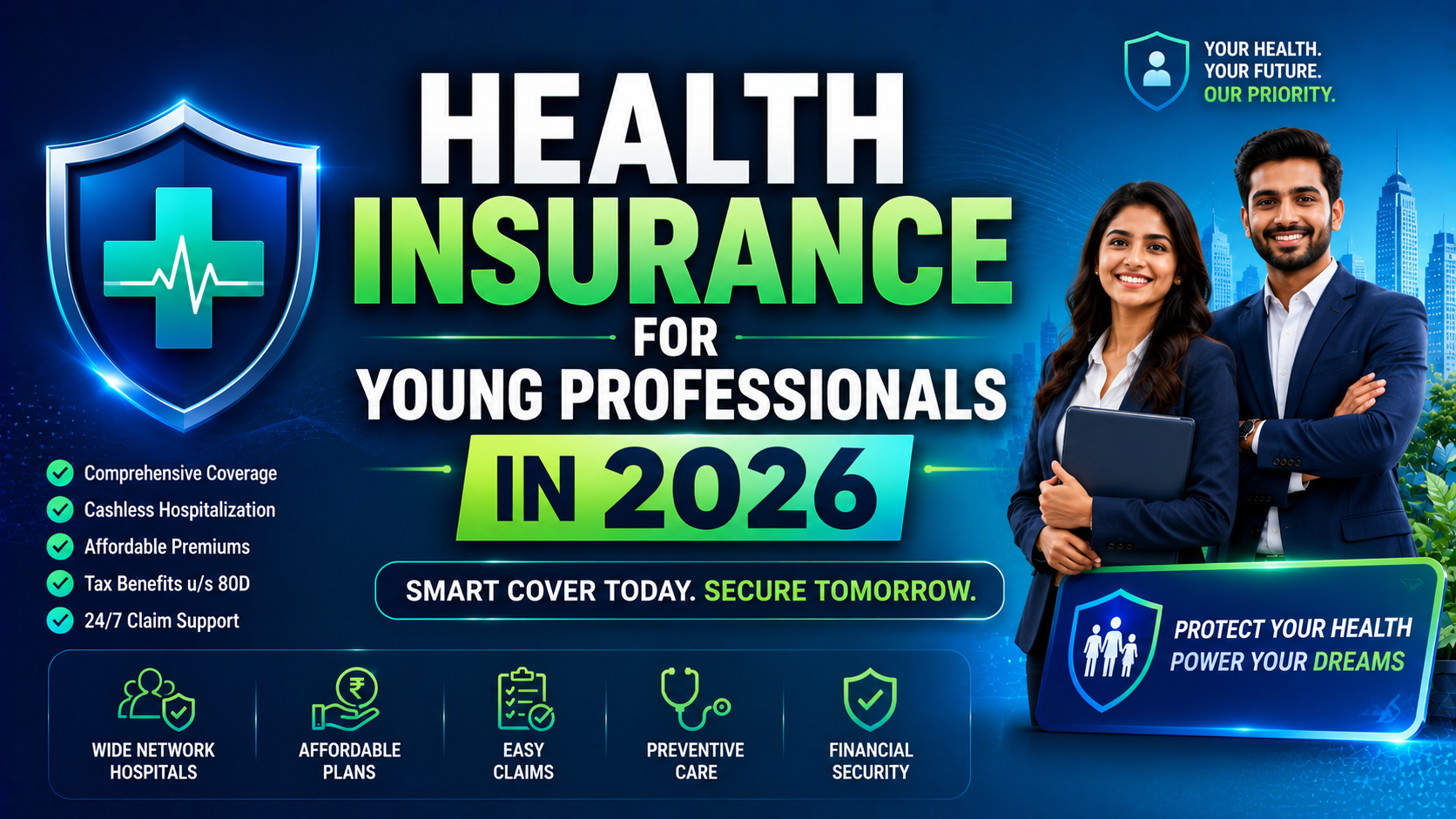
Health Insurance for Young Professionals in 2026: Why Buying Early Can Save You More
Introduction: Good Health Today Doesn’t Guarantee Financial Security Tomorrow
You’re in your twenties or early thirties. You exercise regularly, rarely visit hospitals, and believe health insurance can wait until later in life.
This is one of the most common financial mistakes young professionals make.
Medical inflation continues to outpace general inflation, lifestyle-related diseases are appearing at younger ages, and healthcare costs are rising every year. A single hospitalization can wipe out years of savings if you’re uninsured.
Buying health insurance isn’t just about preparing for illness—it’s about protecting your financial future.
In 2026, modern health insurance offers much more than hospital coverage. From wellness rewards and AI-powered health management to digital claim processing and preventive care benefits, today’s policies provide comprehensive protection for individuals and families alike.
This guide explains why buying health insurance early is one of the smartest financial decisions young professionals can make and how to choose the right policy for your needs.
Why Young Professionals Need Health Insurance in 2026
Many young adults assume they don’t need health insurance because they are healthy.
However, good health today does not eliminate future medical risks.
Several factors make health insurance essential:
- Rising healthcare costs.
- Increasing lifestyle diseases.
- Unexpected accidents.
- Financial independence.
- Job changes.
- Family responsibilities.
Health insurance provides peace of mind while protecting long-term financial goals.
Why You Shouldn’t Rely Only on Employer Health Insurance
One of the biggest misconceptions is that employer-provided health insurance is sufficient.
Although employer coverage is valuable, it has several limitations.
Limited Coverage Amount
Corporate health insurance often provides lower coverage than what families actually require.
Serious illnesses may exceed employer policy limits.
Coverage Ends When You Leave the Job
Changing employers, taking a career break, or starting a business could leave you temporarily uninsured.
Individual health insurance remains with you regardless of your employment status.
Limited Customization
Employer policies usually offer fixed benefits.
You may not be able to add:
- Higher coverage
- Critical illness riders
- Maternity benefits
- Wellness programs
No Long-Term Continuity
Maintaining your own policy allows you to build continuity benefits, cumulative bonuses (where applicable), and complete waiting periods early.
Benefits of Buying Health Insurance at a Younger Age
Lower Premiums
Insurance premiums are generally based on risk.
Young, healthy individuals usually qualify for lower premiums compared to people purchasing insurance later in life.
Buying early helps lock in affordable premiums.
Better Eligibility
Health conditions become more common with age.
Purchasing insurance while healthy improves acceptance chances and policy options.
Completion of Waiting Periods
Many policies include waiting periods for:
- Pre-existing diseases
- Specific treatments
- Maternity benefits
Buying early means these waiting periods may be completed before major healthcare needs arise.
Financial Discipline
Health insurance protects savings from unexpected medical expenses, allowing investments and emergency funds to remain intact.
Individual Health Insurance vs Family Floater Health Insurance
Choosing the right policy depends on your life stage and family responsibilities.
Individual Health Insurance
Each insured person receives a separate sum insured.
Best For
- Young professionals
- Single individuals
- Newly employed graduates
- People seeking personalized coverage
Advantages
- Dedicated coverage.
- Individual claim limits.
- Better for people with different health needs.
Family Floater Health Insurance
A single sum insured is shared among family members.
Best For
- Married couples.
- Young families.
- Parents with children.
Advantages
- More economical than buying separate policies.
- Simplified policy management.
- Comprehensive family protection.
How to Choose the Right Sum Insured in 2026
Medical costs continue to rise every year.
Choosing inadequate coverage can leave families paying significant out-of-pocket expenses.
When deciding your sum insured, consider:
- Your city of residence.
- Family medical history.
- Current healthcare inflation.
- Lifestyle risks.
- Existing employer coverage.
- Future family responsibilities.
Young professionals living in metropolitan cities often require higher coverage due to expensive hospitalization costs.
Essential Features to Compare Before Buying a Policy
Never choose a policy based solely on premium.
Compare these features carefully.
Network Hospitals
A larger hospital network increases access to cashless treatment.
Cashless Hospitalization
Look for insurers with efficient digital claims and broad hospital partnerships.
Waiting Period
Shorter waiting periods generally provide earlier access to benefits.
No Claim Bonus
Many insurers reward claim-free years by increasing the sum insured or offering premium-related benefits, depending on the policy.
Day Care Procedures
Modern treatments often do not require 24-hour hospitalization.
Ensure these procedures are covered where applicable.
Pre and Post-Hospitalization Expenses
Check how many days before and after hospitalization are included.
Restoration Benefit
Some policies automatically restore the insured amount after it has been exhausted under specified conditions.
Wellness Programs
Many insurers now reward healthy lifestyles through wellness initiatives.
Understanding Waiting Periods, Exclusions and Pre-Existing Disease Clauses
Reading policy documents carefully is essential.
Waiting Period
Certain illnesses and treatments become eligible only after a specified duration.
Pre-Existing Diseases
Conditions diagnosed before purchasing the policy may have defined waiting periods before coverage applies.
Policy Exclusions
Common exclusions may include:
- Cosmetic procedures.
- Experimental treatments (unless specifically covered).
- Self-inflicted injuries.
- Non-medically necessary procedures.
Always review exclusions before purchasing.
Common Mistakes First-Time Buyers Make
Buying Only the Cheapest Policy
Low premiums often mean lower coverage or more exclusions.
Ignoring Policy Terms
Many buyers never read waiting periods or exclusions.
Choosing Inadequate Coverage
Medical inflation can quickly make small coverage amounts insufficient.
Delaying the Purchase
Waiting until health issues develop can increase premiums and reduce available options.
Depending Only on Employer Insurance
Job changes can interrupt your coverage when you need it most.
How Wellness Rewards and AI Are Transforming Health Insurance
Health insurance in 2026 goes beyond paying hospital bills.
Modern insurers encourage healthier lifestyles through technology.
Wellness Rewards
Policyholders may earn benefits by:
- Walking regularly.
- Completing health assessments.
- Maintaining fitness goals.
- Participating in preventive health programs.
AI-Powered Health Apps
Artificial Intelligence helps insurers provide:
- Personalized health recommendations.
- Medication reminders.
- Preventive health alerts.
- Digital consultations.
- Health risk assessments.
These innovations encourage proactive healthcare rather than simply covering treatment costs.
Future Trends in Personalized and Preventive Health Insurance
The future of health insurance is becoming increasingly personalized.
Predictive Healthcare
AI may identify health risks before symptoms appear, enabling earlier intervention.
Wearable Device Integration
Smartwatches and fitness trackers could influence wellness rewards and policy personalization.
Personalized Premiums
Future insurance pricing may reflect healthy lifestyle choices and preventive healthcare engagement.
Digital Health Ecosystems
Health insurance, telemedicine, pharmacies, laboratories, and wellness platforms are becoming increasingly interconnected.
Faster Digital Claims
AI-assisted verification and electronic medical records are expected to make claims even faster and more accurate.
Actionable Tips Before Buying Health Insurance
- Buy health insurance as early as possible.
- Compare coverage—not just premiums.
- Choose a policy with a wide network of hospitals.
- Select adequate sum insured based on your city and lifestyle.
- Understand waiting periods and exclusions.
- Review claim settlement performance.
- Consider long-term portability and renewal benefits.
- Evaluate wellness features and digital services.
Key Takeaways
- Buying health insurance early helps lock in lower premiums.
- Individual health insurance is ideal for young professionals, while family floater plans suit growing families.
- Employer health insurance should complement—not replace—your personal policy.
- Choosing adequate coverage is essential due to rising healthcare inflation.
- Waiting periods and exclusions should be carefully reviewed before purchasing.
- AI-powered health insurance and wellness programs are reshaping preventive healthcare.
- Digital claims and cashless hospitalization continue to improve customer experience.
FAQ
1. Why should young professionals buy health insurance early?
Buying early generally provides lower premiums, better eligibility, earlier completion of waiting periods, and long-term financial protection.
2. Is employer health insurance enough?
Employer insurance is valuable but often limited in coverage and typically ends when employment changes. A personal policy provides continuous protection.
3. Which is better: Individual or family floater health insurance?
Individual health insurance suits single professionals, while family floater plans are often more cost-effective for married couples and families.
4. What sum insured should I choose in 2026?
The appropriate sum insured depends on your location, healthcare costs, family size, medical history, and financial goals. Higher coverage is generally advisable in cities with expensive healthcare.
5. How is AI changing health insurance?
AI improves claim processing, supports personalized wellness recommendations, enables digital health monitoring, helps detect fraud, and enhances customer service through automation.
Conclusion
Health insurance is no longer a product that people purchase only after marriage or later in life. For today’s young professionals, it is a critical part of financial planning. Rising medical costs, changing lifestyles, and increasing healthcare needs make early coverage more valuable than ever.
By purchasing health insurance while you’re young and healthy, you can secure lower premiums, complete waiting periods sooner, and build long-term financial protection. Whether you choose an individual health insurance policy or a family floater plan, the key is selecting coverage that aligns with your current needs while preparing for future responsibilities.
As healthcare continues to evolve with AI, digital claims, wellness rewards, and preventive care, the best health insurance in 2026 will do more than reimburse medical bills—it will help you stay healthier, manage risks proactively, and safeguard your financial future for years to come.