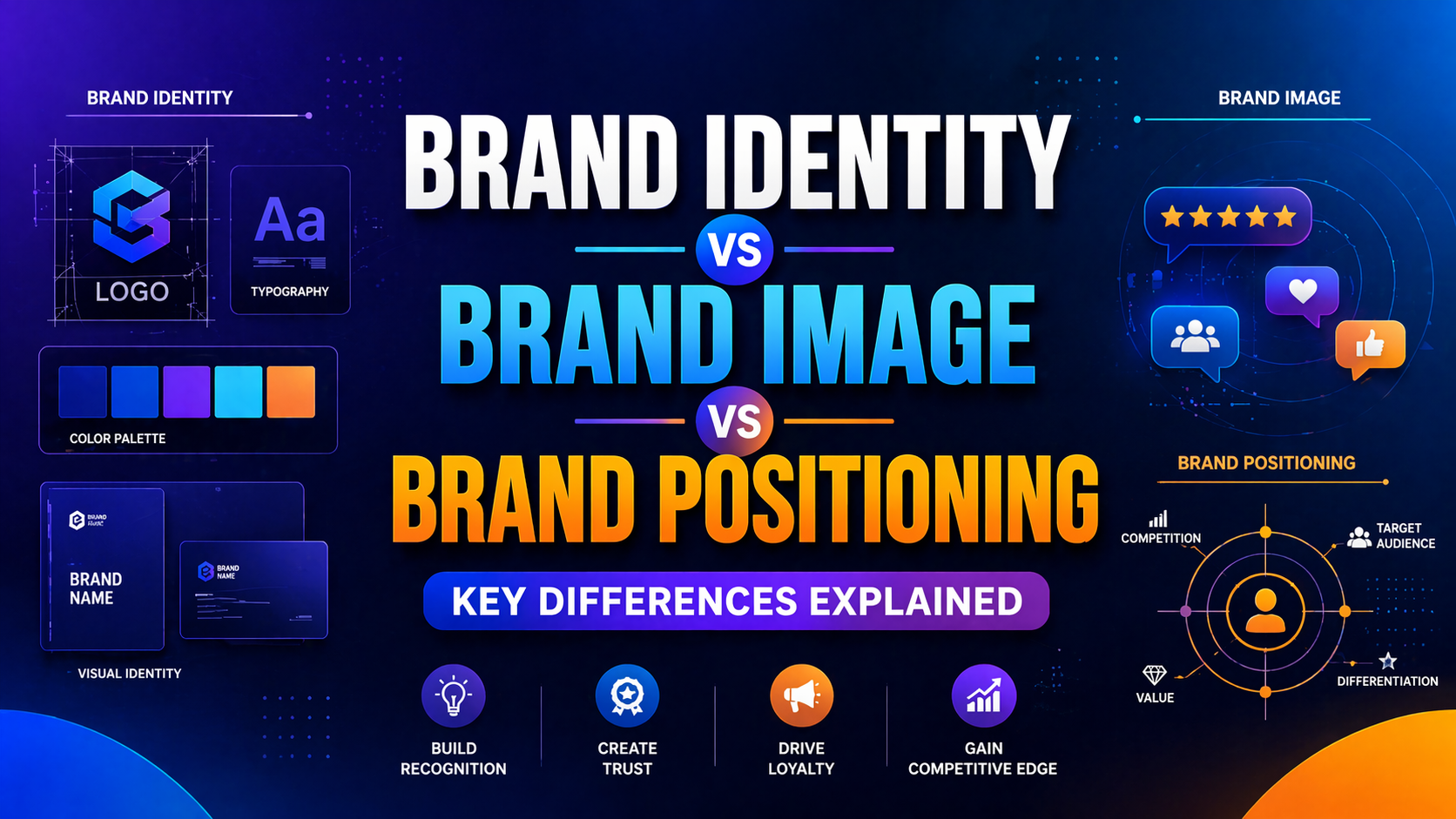
Brand Identity vs Brand Image vs Brand Positioning: Key Differences Explained
Many businesses confuse brand identity, brand image, and brand positioning, assuming they mean the same thing. However, these three concepts play very different roles in shaping how customers perceive a business.
Understanding the difference between brand identity vs brand image vs brand positioning is essential for building a strong marketing strategy, improving customer trust, and achieving long-term business success.
Without clear branding structure:
- marketing becomes inconsistent
- customers feel confused
- brand value decreases
- differentiation becomes difficult
- trust reduces
This guide explains each concept in simple professional language, along with examples, frameworks, and expert insights.
What is Brand Identity?
Brand identity refers to how a company wants to present itself to customers.
It is the collection of visual, verbal, and emotional elements that define a brand’s personality.
Brand Identity Definition
Brand identity is the intentional design of a brand’s appearance, communication style, and overall representation.
Key Components of Brand Identity
- Logo design
- Color palette
- Typography style
- Brand voice
- Tagline
- Visual style
- Brand personality
- Messaging tone
Example of Brand Identity
A technology brand may choose:
- blue color for trust
- modern typography
- minimal design
- professional tone
These elements create a consistent brand impression.
What is Brand Image?
Brand image refers to how customers actually perceive a brand in their minds.
Brand image is formed through:
- customer experience
- product quality
- reviews and ratings
- word-of-mouth
- social media feedback
- marketing communication
Brand Image Definition
Brand image is the mental perception customers have about a company based on interactions and experiences.
Brand image may or may not match brand identity.
What is Brand Positioning?
Brand positioning defines how a brand differentiates itself from competitors in the market.
It communicates why customers should choose a particular brand.
Brand Positioning Definition
Brand positioning is the strategic process of establishing a unique place in the customer’s mind relative to competitors.
Examples of Positioning Strategies
- premium positioning
- affordable positioning
- innovative positioning
- eco-friendly positioning
- luxury positioning
- performance-focused positioning
Positioning helps customers understand what makes the brand special.
Brand Identity vs Brand Image vs Brand Positioning (Comparison Table)
| Factor | Brand Identity | Brand Image | Brand Positioning |
|---|---|---|---|
| Meaning | How brand presents itself | How customers perceive brand | How brand differentiates in market |
| Controlled by | Company | Customers | Company strategy |
| Focus | visual & communication elements | perception & reputation | competitive advantage |
| Purpose | create consistent appearance | build trust | establish uniqueness |
| Example | logo, colors, typography | customer reviews | premium or budget positioning |
Relationship Between Identity, Image, and Positioning
These three branding concepts are interconnected.
Simple Relationship Framework
Brand Identity → shapes → Brand Image → supports → Brand Positioning
If identity is consistent and customer experience is positive, brand image improves.
Strong image helps reinforce positioning strategy.
Step-by-Step Branding Framework
Step 1: Define Target Audience
Understand customer needs and expectations.
Step 2: Develop Brand Identity
Create visual and messaging guidelines.
Step 3: Establish Brand Positioning
Identify unique value compared to competitors.
Step 4: Deliver Consistent Experience
Ensure product quality and customer support match brand promise.
Step 5: Monitor Brand Image
Track customer feedback and perception.
Real-World Examples of Branding Differences
Example 1: Premium Brand Strategy
Identity:
minimal design, elegant typography
Positioning:
high-quality premium product
Image:
customers perceive brand as reliable and prestigious
Budget Brand Strategy
Identity:
simple design, practical messaging
Positioning:
affordable pricing
Image:
customers perceive brand as value-focused
Innovation Focused Brand
Identity:
modern design, futuristic messaging
Positioning:
innovation leader
Image:
customers associate brand with advanced technology
Why Understanding These Differences is Important
Understanding brand structure helps businesses:
- create consistent communication
- improve marketing effectiveness
- increase brand trust
- build long-term loyalty
- improve customer experience
Strong branding increases recognition and credibility.
Actionable Branding Strategies
Maintain Consistent Visual Identity
Use same color palette, typography, and design across channels.
Focus on Customer Experience
Customer experience influences brand image.
Create Clear Positioning Statement
Define what makes brand unique.
Align Messaging with Brand Personality
Communication tone should reflect brand values.
Monitor Online Reputation
Reviews and social media influence brand image.
Common Mistakes to Avoid
Confusing Identity with Image
Businesses assume customers perceive brand exactly as intended.
Lack of Consistency
Different messaging reduces brand clarity.
Weak Positioning Strategy
Unclear positioning makes brand forgettable.
Ignoring Customer Feedback
Customer perception shapes brand image.
Overcomplicated Messaging
Simple communication improves clarity.
Expert Branding Tips
Build Emotional Connection
Emotion influences customer loyalty.
Focus on Long-Term Brand Building
Brand perception develops over time.
Conduct Brand Audits Regularly
Analyze perception gaps.
Study Competitor Positioning
Identify differentiation opportunities.
Align Product Quality with Brand Promise
Mismatch reduces trust.
Future Trends in Branding Strategy (2026 and Beyond)
AI Driven Brand Personalization
AI helps customize brand communication.
Experience Based Branding
Customer experience becomes major differentiator.
Community Based Brand Building
Communities strengthen loyalty.
Authenticity Focused Branding
Customers prefer transparent brands.
Voice Search Brand Optimization
Conversational brand messaging becomes important.
Key Takeaways
- Brand identity defines visual and communication style.
- Brand image represents customer perception.
- Brand positioning defines competitive differentiation.
- Consistency improves brand trust.
- Customer experience influences brand perception.
- Strong positioning improves recognition.
Conclusion
Understanding the difference between brand identity vs brand image vs brand positioning helps businesses build strong marketing strategies and improve brand value.
Each concept plays a unique role:
- identity creates appearance
- image reflects perception
- positioning defines differentiation
Businesses that align identity, image, and positioning achieve stronger brand recognition and long-term growth.
FAQ
1. What is the difference between brand identity and brand image?
Brand identity is how a company presents itself, while brand image is how customers perceive the brand.
2. What is brand positioning in simple words?
Brand positioning defines how a brand is different from competitors.
3. Why is brand positioning important?
It helps customers understand why they should choose a particular brand.
4. Can brand image be different from brand identity?
Yes, customer perception may differ from company intention.
5. How can businesses improve brand image?
By improving customer experience, communication, and product quality.