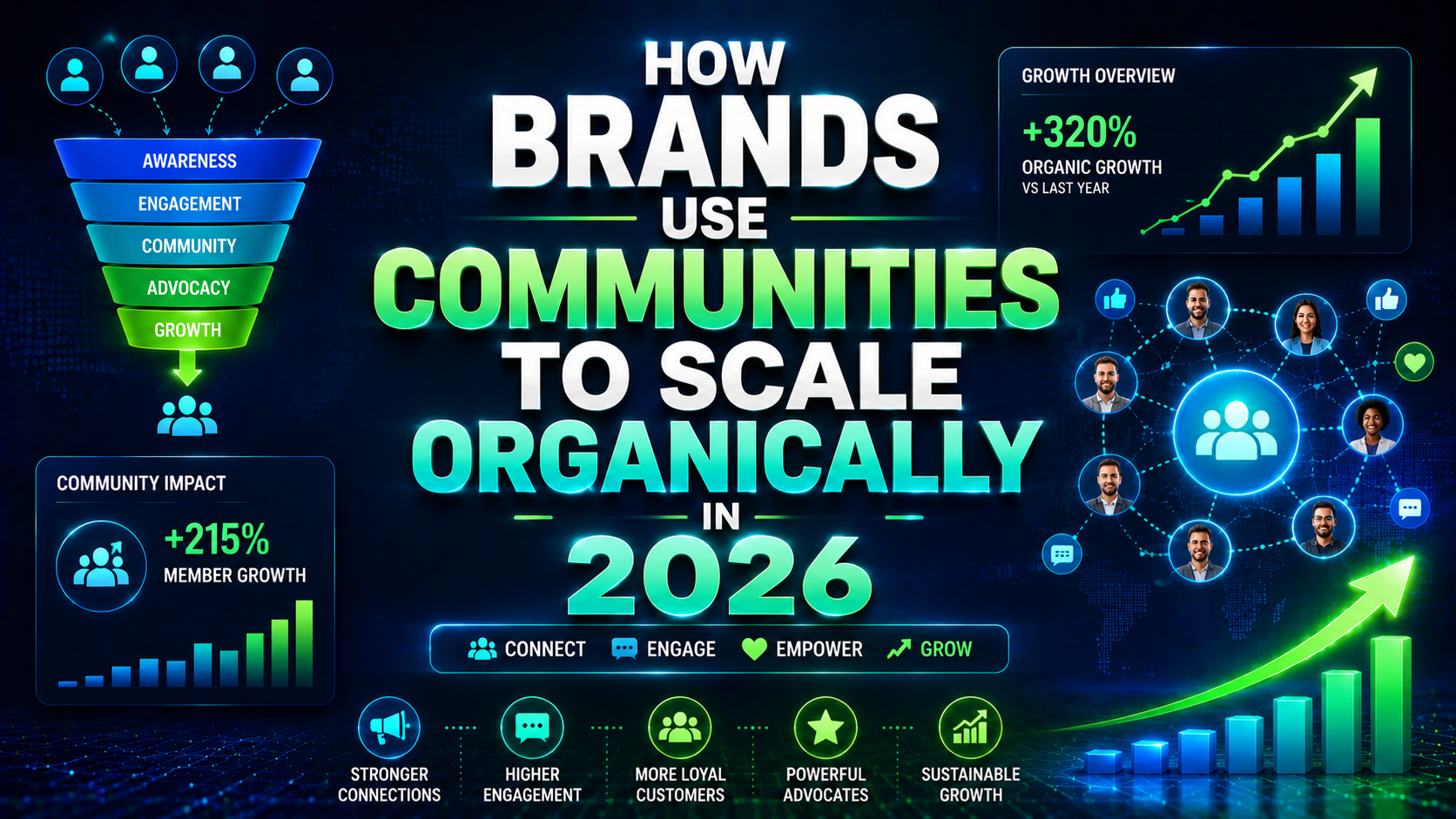
Community-Led Growth Marketing: How Brands Use Communities to Scale Organically in 2026
Introduction: Why Traditional Growth Marketing Is Losing Effectiveness
Customer acquisition costs are rising.
Paid advertising is becoming increasingly expensive.
Organic reach on social platforms continues to decline.
At the same time, consumers trust recommendations from real people more than traditional advertisements.
This shift has created one of the most powerful marketing movements of the decade:
Community-Led Growth Marketing
Forward-thinking brands are no longer focusing solely on building audiences.
Instead, they are building communities.
Communities create engagement, loyalty, advocacy, and long-term organic growth that advertising alone cannot deliver.
In 2026, community-driven brands are using private groups, creator ecosystems, customer networks, and niche communities to drive sustainable business growth.
This guide explores:
future trends shaping community marketing
what community-led growth is
audience vs community differences
community acquisition funnels
successful community examples
retention strategies
monetization models
What Is Community-Led Growth Marketing?
Community-led growth marketing is a growth strategy where businesses build and nurture communities that actively contribute to customer acquisition, retention, engagement, and advocacy.
Rather than marketing Research to people, brands create spaces where people connect with each other around a shared interest, mission, or product.
These communities become growth engines that drive:
- referrals
- user-generated content
- customer loyalty
- product feedback
- organic brand awareness
Simple Definition
Community-led growth is a marketing approach where engaged community members help drive business growth through participation, advocacy, and collaboration.
Why Community-Led Growth Is Booming in 2026
Several market shifts are accelerating community growth strategies:
Rising Customer Acquisition Costs
Paid media costs continue increasing across:
- search advertising
- social advertising
- influencer sponsorships
Brands need more sustainable growth channels.
Trust-Based Purchasing
Consumers increasingly trust:
- peers
- creators
- communities
- customer experiences
more than traditional advertising.
Demand for Belonging
Modern consumers seek:
- connection
- shared values
- identity
- exclusivity
Communities satisfy these psychological needs.
Creator Economy Expansion
Creator-led communities have become powerful marketing ecosystems.
Brands are partnering with creators to build highly engaged niche audiences.
Audience vs Community: Understanding the Critical Difference
Many businesses believe they have communities when they actually have audiences.
| Audience | Community |
|---|---|
| Followers | Participants |
| Passive | Active |
| One-way communication | Two-way interaction |
| Attention-based | Relationship-based |
| Easy to lose | Difficult to replace |
| Consumes content | Creates content |
Example
An Instagram page with 100,000 followers is an audience.
A private group where members actively help each other is a community.
The difference is engagement.
The Community Acquisition Funnel Explained
Traditional marketing funnels focus on moving prospects toward purchase.
Community-led growth adds a relationship layer.
Stage 1: Discovery
Users discover your brand through:
- content marketing
- SEO
- creators
- social media
- referrals
Goal:
Generate awareness.
Stage 2: Community Entry
Users join:
- Discord servers
- WhatsApp groups
- Facebook communities
- Slack workspaces
- membership platforms
Goal:
Build connection.
Stage 3: Engagement
Members participate through:
- discussions
- comments
- events
- polls
- challenges
Goal:
Increase belonging.
Stage 4: Advocacy
Engaged members begin promoting your brand.
Examples:
- referrals
- testimonials
- reviews
- social sharing
Goal:
Drive organic growth.
Stage 5: Loyalty
Long-term members become brand advocates.
Goal:
Maximize retention.
Key Benefits of Brand Community Building
Lower Customer Acquisition Costs
Community referrals reduce dependency on paid advertising.
Word-of-mouth remains one of the highest-converting acquisition channels.
Higher Customer Retention
Community members stay engaged longer.
The sense of belonging increases loyalty.
Increased Brand Trust
Trust is built through:
- peer recommendations
- shared experiences
- authentic discussions
This trust directly impacts purchasing decisions.
More User-Generated Content
Communities naturally produce:
- reviews
- tutorials
- testimonials
- social content
This content improves SEO and social visibility.
Continuous Product Feedback
Communities provide valuable customer insights.
Brands can identify:
- pain points
- feature requests
- emerging trends
before competitors.
Successful Brand Community Examples
Fitness Communities
Fitness brands build communities around:
- workouts
- accountability
- progress sharing
Members motivate each other, increasing engagement and retention.
SaaS Product Communities
Software companies create communities for:
- product education
- troubleshooting
- feature discussions
These communities reduce support costs and improve customer retention.
Creator Communities
Creators build private groups where members gain:
- exclusive content
- networking opportunities
- mentorship
These communities become powerful business assets.
eCommerce Brand Communities
Brands encourage customers to share:
- product experiences
- photos
- reviews
This creates social proof and organic growth.
Retention Through Communities
Customer retention is often where communities create the greatest impact.
A customer who feels connected to a community is less likely to leave.
Why Communities Improve Retention
Emotional Connection
Customers stay because of relationships, not just products.
Shared Identity
Members identify with the community’s mission.
Continuous Engagement
Regular interaction keeps members involved.
Ongoing Value
Communities provide:
- learning
- networking
- support
- recognition
Beyond the product itself.
Community Monetization Strategies
Communities can directly support revenue growth.
Membership Programs
Offer premium access for:
- exclusive content
- private events
- expert sessions
Digital Products
Communities help sell:
- courses
- templates
- ebooks
- coaching programs
Product Upselling
Engaged members are more likely to purchase premium offerings.
Sponsorship Opportunities
Large communities attract partnerships and sponsorships.
Community Commerce
Members influence purchasing decisions through peer recommendations.
How to Build a Community-Led Growth Strategy
Step 1: Define a Clear Mission
People join communities with purpose.
Ask:
Why should members join?
Step 2: Select the Right Platform
Popular options include:
- Discord
- Slack
- WhatsApp Communities
- Facebook Groups
- Circle
- Skool
Choose based on audience behavior.
Step 3: Create Valuable Experiences
Focus on:
- discussions
- education
- networking
- collaboration
Value drives engagement.
Step 4: Encourage Participation
Communities thrive on contribution.
Ask questions.
Host events.
Recognize members.
Step 5: Develop Community Leaders
Empower active members to help moderate and support growth.
Common Mistakes to Avoid
Treating Communities as Sales Channels
Communities should focus on value first.
Constant promotion damages trust.
Focusing on Member Count
Large communities with low engagement have limited value.
Quality matters more than quantity.
Ignoring Moderation
Healthy communities require active management.
Lack of Consistency
Inactive communities quickly lose momentum.
Not Listening to Members
Community feedback is one of the most valuable assets brands possess.
Expert Insights for Community Growth Success
Build Relationships Before Revenue
Trust creates long-term monetization opportunities.
Prioritize Member Success
Successful members become advocates.
Encourage Peer-to-Peer Interaction
Communities become stronger when members help each other.
Reward Contributions
Recognition drives engagement.
Think Long-Term
Communities compound in value over time.
Future of Community-Driven Marketing (2026–2030)
AI-Powered Community Management
AI will help:
- moderate discussions
- identify engagement trends
- personalize experiences
Creator-Owned Communities
Creators will increasingly build independent ecosystems.
Community Commerce Growth
Communities will become direct sales channels.
Micro-Communities Expansion
Smaller niche communities will outperform broad audiences.
Community-Based Search & Discovery
Consumers will increasingly seek recommendations from trusted communities rather than traditional search engines.
Key Takeaways
- Community-led growth marketing focuses on relationships, not transactions.
- Communities outperform audiences in retention and advocacy.
- Community acquisition funnels drive sustainable growth.
- Strong communities reduce customer acquisition costs.
- Creator community marketing is becoming a major growth channel.
- Retention through communities creates long-term business value.
- Community-driven marketing will play a larger role in future growth strategies.
Conclusion
Community-led growth marketing is becoming one of the most effective strategies for sustainable business growth.
As advertising costs rise and consumer trust shifts toward peer recommendations, communities offer a powerful competitive advantage.
Brands that invest in:
- authentic engagement
- customer relationships
- creator ecosystems
- long-term community building
will build stronger loyalty, higher retention, and more resilient growth.
In 2026 and beyond, the most successful brands will not simply build audiences.
They will build thriving communities.
FAQ
1. What is community-led growth marketing?
Community-led growth marketing uses engaged communities to drive customer acquisition, retention, advocacy, and organic business growth.
2. What is the difference between an audience and a community?
An audience consumes content, while a community actively participates, collaborates, and contributes.
3. How do communities improve customer retention?
Communities create emotional connections, engagement, belonging, and ongoing value that increase loyalty.
4. What platforms are best for building communities?
Popular platforms include Discord, Slack, WhatsApp Communities, Facebook Groups, Circle, and Skool.
5. How can brands monetize communities?
Brands can monetize through memberships, digital products, premium content, sponsorships, and community commerce.